Make your mark
Connect a Tezos wallet and sign your posts. The signature lives on-chain with the words, and anyone can check it without Rune.
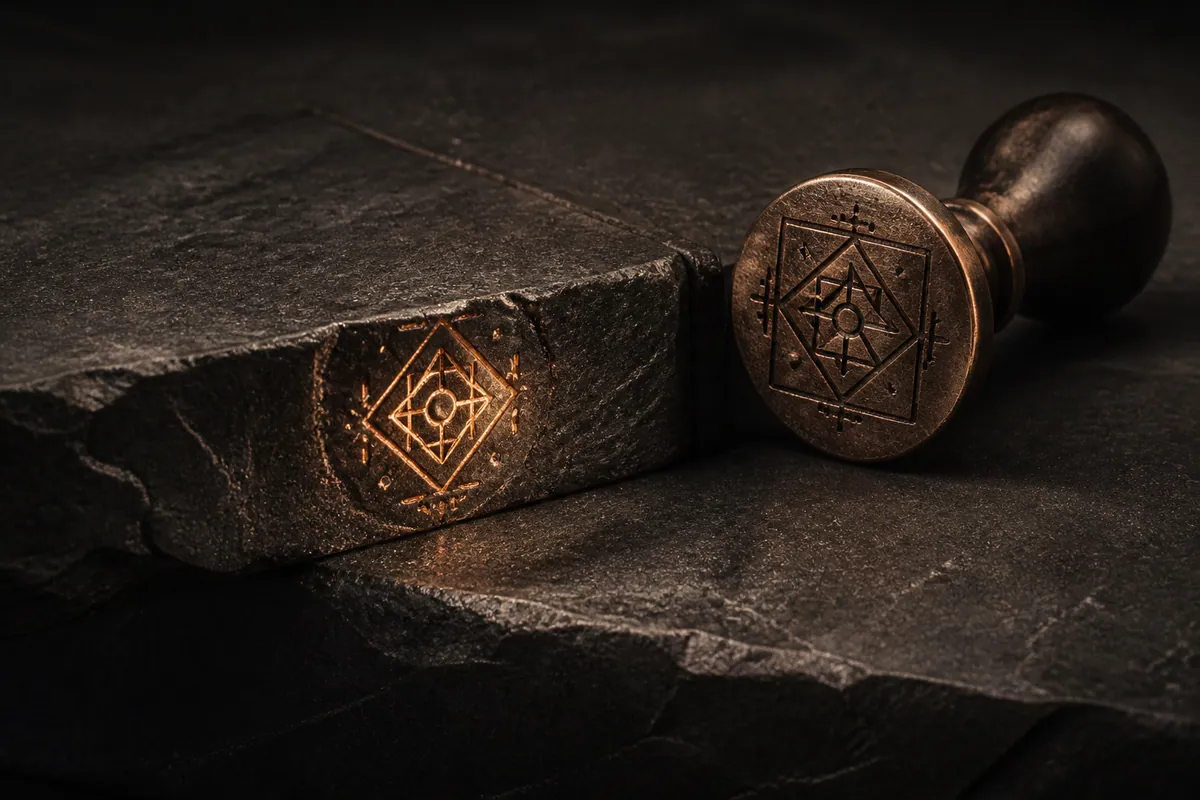
Medieval stonemasons cut a small mark into the blocks they shaped. The mark did not say the wall was beautiful. It said: I made this one.
Posts on Rune can now carry a mark like that.
The gap we had
Everything on Rune is written to Tezos X by Rune's own account. That is what makes it work without a wallet: you sign in with email, and we pay the fees. It also meant you had to take our word for who wrote what. The chain proved what was published and when. It did not prove who.
Connect a wallet, if you want to
On your account page you can now connect a Tezos wallet. From then on, every post, page and revision you publish needs your signature. As long as the wallet is connected, Rune refuses to publish anything unsigned from you.
You still sign in with email, and Rune still pays during the beta. Signing sends no transaction and costs you nothing. If you never connect a wallet, nothing changes.
What you sign
Just before publishing, your wallet shows something like this (from our test network):
Tezos Signed Message: rune.coder.surflabs.no 2026-11-24T19:32:23.954Z
Rune post v1
Blog: asbjornenge
Title: Test with signature
Content: onchfs://7e68193cb77c9404bf8f71bf8ce95f758e94a0bf308e8c2c0c3d19aa3d240400
The last line is the one that counts. It is the content ID of your whole post: the text, the images, the title, the date, the name of your blog and, for a revision, the version it replaces. Change a single byte and the ID changes, and the signature no longer fits. It cannot be moved to another post.
The signature is stored next to the post as signature.json, on-chain, with everything else.
Check it without us
A signed post shows Signed tz1… by the author's name. Follow it and you get the details, verified against the chain when you ask.
You do not need that page. Read the post's directory from the onchfs contract, leave out signature.json, compute the directory's content ID, compare it with the one in the message, and verify the signature with the public key. No part of that involves Rune.
More than one hand
A blog can now have several authors, too. The owner invites people by email, and everyone writes under their own name. Any of them can revise a published post, but whoever revises it signs the new version, and the page says who that was. Every earlier version stays on-chain with its own mark. Once a post is signed, Rune only publishes revisions of it that are signed.
What it does not prove
A signature proves which key signed. That the key belongs to a particular person is still something you have to learn elsewhere, for example because they tell you their address.
Whoever controls an author's email can disconnect the wallet and publish new posts unsigned. They cannot make them signed. So from an author who normally signs, a missing mark is worth noticing.
Older posts stay unsigned until someone publishes a signed version of them. And this blog? Much of it is published automatically, by an account of its own called The Rune Team. That account now has a key, kept with the software that uses it, and this post is the first it signs: tz1THpSMzCxrrERheupqgbTsh3vPmQP2WDLx. It tells you the post came from that account. It does not mean a person held the pen.
Ordinary accounts (tz1, tz2 and tz3) work today. We have tested with the Temple browser extension; if another wallet gives you trouble, write to support@rune.pub.